Sweet and refreshing, cantaloupe is a favorite summer fruit for a reason. Much like watermelon, the low-calorie fruit has a high water and fiber content and is full of nutrients. But can your cat reap some of the refreshment and good-for-you vitamins and minerals found in cantaloupe?
Is Cantaloupe Safe for Cats?
Generally speaking, it’s safe for cats to eat melon fruits like cantaloupe. But, of course, moderation is key.
As with any new food you might be considering offering your cat, you should always check in with your veterinarian who can provide guidance on feeing your unique and individual pet. It’s also a good idea to introduce a new food—even a healthy fruit or veggie like cantaloupe—to your cat slowly with a few small pieces at first so you can monitor for an allergic reaction or any indication that he or she can’t tolerate it (such as diarrhea, for example).
Health Benefits of Cantaloupe for Cats
Cantaloupe is an excellent source of dietary fiber, folate, vitamin B6, A, and C, niacin, and potassium, while also being low in calories and a rich source of both fiber and water. And the good news is that both you and your kitty can benefit from the vitamins and nutrients found in cantaloupe.
In particular, vitamins A and C provide an array of health benefits for cats, such as their role as antioxidants. Antioxidants capture free radicals, which can effectively slow down your cat’s aging process and promote healthy cell function, as well as help reduce the risk of certain diseases. Cantaloupe’s high water and fiber content also helps facilitate healthy digestion while helping to prevent issues like constipation and dehydration.
Dangers of Cantaloupe for Cats
The issue with many fruits, including cantaloupe, is that they are high in sugar. Even though it’s a natural, good-for-you sugar, it’s still not the best for cats because it can cause weight gain as well as exacerbate health issues such as diabetes. Pet owners of cats that already have these types of health issues should be especially cautious about feeding their cat fruits like cantaloupe.
Another danger of cantaloupe is that like other melon fruits, it contains a rind. And if your cat consumes it, it can lead to big problems—much like watermelon rinds, consuming them can not only cause gastrointestinal upset, but they can become impacted in your cat’s digestive tract. The tough, fibrous skins of the rinds are also a choking hazard.
Additionally, while the seeds of a cantaloupe are technically harmless, you should try to avoid allowing your cat to eat them as they can be a choking hazard. You’ll also want to prevent your cat from licking the outside of a cantaloupe; as with many fruits and vegetables, the outer skin can contain harmful bacteria as well as pesticides and other chemicals that can make your cat ill.
How to Feed Cantaloupe to Your Cat
When it comes to cantaloupe, a few bite-size pieces are likely perfectly fine for most cat—although you’ll want to skip this particular treat if your cat has a sensitive stomach or is diabetic. Too much cantaloupe can cause GI upset in both humans and their feline counterparts. If your cat eats cantaloupe and then presents symptoms such as vomiting, lethargy, or lack of appetite, you’ll want to alert your veterinarian right away.
As when offering all fruit, it’s important to thoroughly wash and scrub the outer surface prior to preparation (this will prevent bacteria or pesticides from contaminating the fruit as you start to open and cut it up for your pet). You’ll also want to remove the seeds and rind, and slice the melon into small one- or two-inch-thick bite-sized wedges (just keep in mind the size of your cat when cutting).
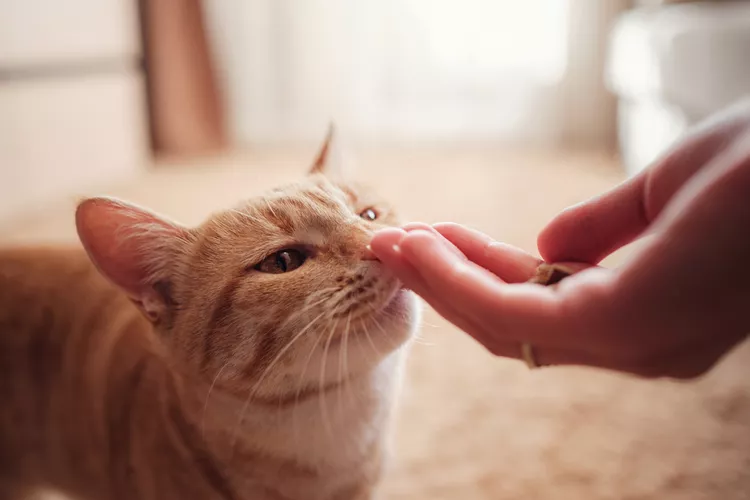
Cantaloupe should only be fed as a special treat, and not part of their regular diet. You can even put cantaloupe into a Kong or other puzzle toy to provide an exciting—and tasty—mental exercise for your cat.